
Josie's Semester in Central America
Guest post by gapper Josie, describing her semester in Central America during the fall of 2021
During the fall semester of my gap year I spent two months in Costa Rica and Guatemala. Both countries are equally stunning. Costa Rica was filled with beautiful beaches and incredible wildlife whereas Guatemala held rich culture and gorgeous volcanoes. I was able to learn a lot in both countries. In Costa Rica I was more focused on nature, environmental issues, and wildlife (specifically sea turtles). In Guatemala I took time to learn more about Mayan culture, the history of the country, and spent more time working on my Spanish skills.
Costa Rica
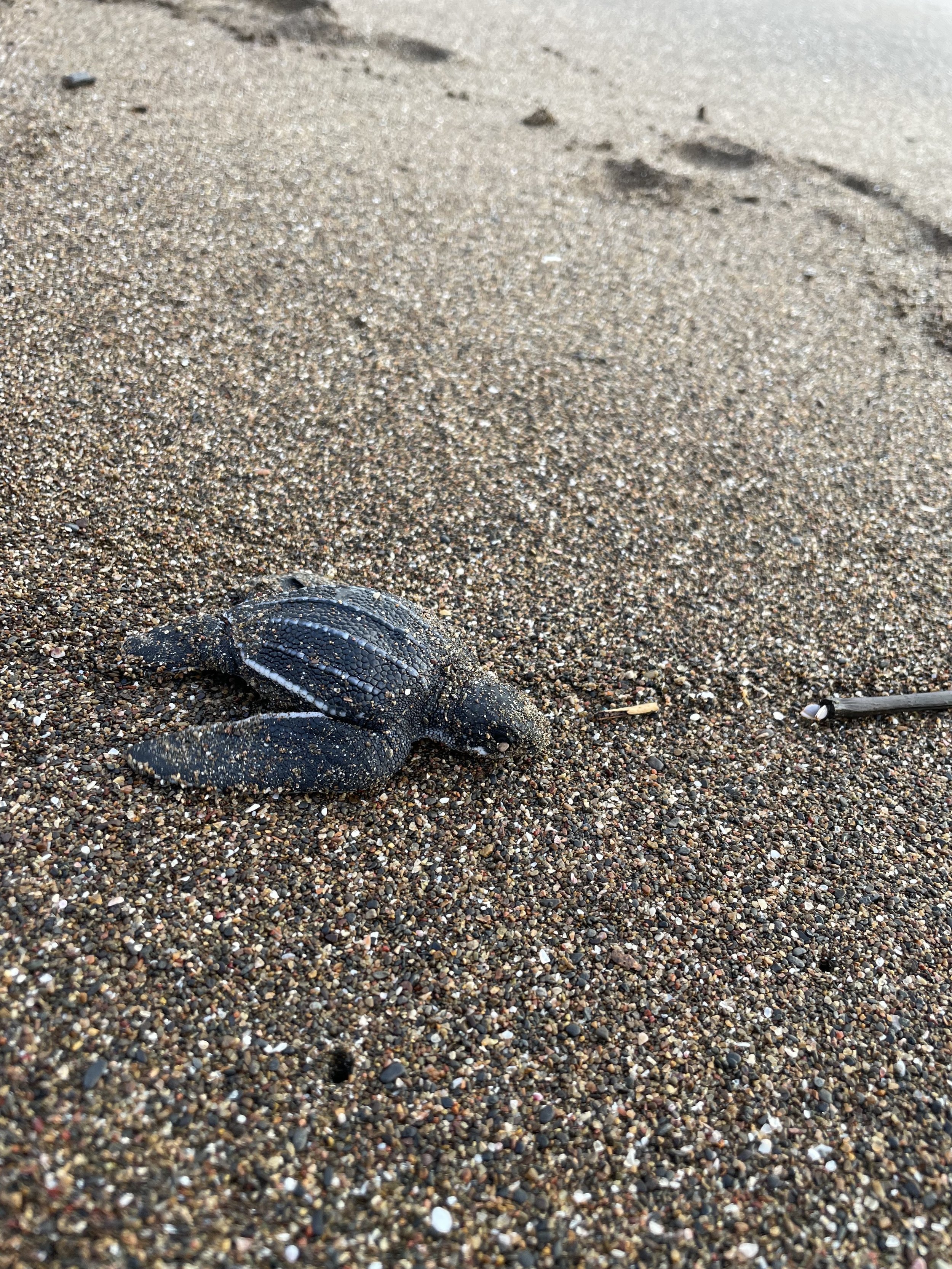
I spent six weeks in Costa Rica moving around the Pacific side of the country. I spent time in Santa Teresa, Montezuma, Samara, and Monteverde. I spent most of my time doing volunteer work (cleaning up microplastics on the beach, working in a recycling center, and working at sea turtle hatcheries). Plastic is a huge issue on the beaches in Costa Rica even though the country itself has moved to start banning all single use plastics. Trash is constantly washing up on the beaches and whenever I participated in beach cleans it was easy to fill up a large bag with plastic within only about fifteen minutes. For me this put into perspective the harsh reality of the materialistic lives that many people, including myself live. Now when I find myself in a grocery store or gas station, I cringe at the hundreds of plastic bottles and the plastic packaging lining the shelves knowing that they could very likely end up washing up in a beautiful place such as Costa Rica. Other than learning about the effects of plastics on the environment and cleaning them up off beaches, I also spent time taking Spanish classes, exploring the towns I was in, and taking in the beautiful landscapes laid out in front of me. Some of my all time favorite experiences in Costa Rica were getting to work up close with sea turtles. I spent time in two different turtle sanctuaries where I was able to help release baby sea turtles into the ocean and watch over the hatcheries. I even got to swim with an adult sea turtle! That is definitely a memory that I will cherish for the rest of my life.
Guatemala

I only spent about two and a half weeks in Guatemala but during that time I was able to have some of the most amazing experiences. In Guatemala I visited Antigua, Lake Atitlan, Flores, and Semuc Champey. Guatemala is the land of volcanoes. There are 37 volcanoes in Guatemala and I even got to hike up one. In my first few days I hiked Acatenango and after a seven hour uphill trek I was met with stunning views of Volcan de Fuego. When I say that this was one of the most amazing things I’ve ever seen I’m not exaggerating even a little bit. It was freezing and windy at our camp on Acatenango and even though the weather sounds miserable, there’s no way to be unhappy when you are sitting on top of one volcano while watching another one erupt every 15-20 minutes.
Throughout the rest of my time in Guatemala I was immersed in beautiful landscapes and an interesting culture. Guatemala holds some of my favorite memories such as swimming in Lake Atitlan at sunset with my friends, watching the sunrise over the volcanoes and Antigua from 12,000 feet up and meeting new people from all around the world. Near the end of my time in Guatemala, I spent five days solo in Antigua where I spent everyday wandering through the ruins and the city. I easily spent five or six hours a day just roaming around the city meeting new people, trying local restaurants and practicing my conversational Spanish skills with the locals.
Both Costa Rica and Guatemala were breathtaking countries and I’m extremely grateful for the time I was able to spend there. I not only learned about the environment, culture, and history but also about myself. One of my biggest goals in taking a gap year was to push myself out of my comfort zone and I would say that I definitely achieved that while I was in Central America. I found myself trying new things and encountering things that normally would have scared me on a daily basis such as snorkeling next to sharks, finding a Boa Constrictor in my room, climbing volcanoes, and much more. I pushed myself to take in every experience no matter how much it freaked me out because that’s the only way I was ever going to learn to find comfort in the uncomfortable experiences. Of course everyday wasn’t perfect, I had days where everything seemed to go wrong or where my mental health took a toll on me but by the end of two months I found myself almost embracing these discomforts. Not everything can be perfect, even when you feel as though you’ve woken up in paradise. Those discomforts and struggles were part of the journey and can’t be ignored when reflecting on my experiences because some of those experiences were just as important as the good ones. I believe that going into my trip to Central America, I had this idea that it could fix some things in my life or that it could fill in the gaps of what I felt as though was missing from my life. In some ways it did offer me relief, I found the importance of being grateful for every day and never taking anything for granted and I felt as though I was truly living everyday. On the other hand, I realized that even the most beautiful places and amazing experiences can’t solve every problem. I will always be grateful for my time in Costa Rica and Guatemala because as my first international travel experience, I feel as though I was able to learn a lot about myself while simultaneously learning about the world.

Antigua, Guatemala

Volcan de Fuego
Josie was the recipient of the 2021 Free to Roam Adventures Counseling Scholarship. Her budget for her two months in Central America was under $6,000. She was able to fund her travels through part-time work during and after high school. The deadline to apply for the 2022 Counseling Scholarship is April 2022.
How to Pay for a Gap Year
View our livestream from Gap Year Exploration month with an overview of the cost of a gap year, scholarship opportunities, tips for creating a more affordable gap year, and more!

Paying for a Gap Year
A well-planned gap year does not require you to spend thousands of dollars. Some of the most transformative gap years are also the most affordable. You may find that a gap year actually helps to save you money.
Whether you are a student or parent of a student interested in a gap year you are probably trying to figure out how (and why) you should pay for a gap year when you’ve got college tuition to worry about. This is a totally reasonable concern. However, a well-planned gap year does not require you to spend thousands of dollars. Some of the most transformative gap years are also the most affordable.
You may find that a gap year actually helps to save you money. According to data from the nonprofit Complete College America, only 20 percent of students complete a bachelor’s degree in four years. Only 57 percent of students who enroll in college will graduate in six years. That means there is a very high likelihood, that students entering college next year, right out of high school, will take longer than 4 years to graduate, accruing more debt as a result. In contrast, research has found that students who take a gap year are more likely to graduate in 4 years or less. A gap year allows students to explore possible career or major options, work a minimum wage job (gaining critical perspective on the opportunity value of a college degree), travel, and often take a much needed break from academia for their personal mental health. The result is a more mature, focused, and generally well-prepared student entering college.
Work Work Work
Self-funded gap year travel is much more affordable than most peer-based travel programs. I paid for 2 months in Australia, New Zealand & Fiji by babysitting and working at a frozen yogurt shop for a year. Working to pay for your own travel makes the experience more meaningful, because you know how hard you worked to get there. Funding your own travel experiences also means you will likely be more frugal and make better choices when spending money during your travels.
Working during the summers throughout high school could allow you to save up enough to spend your entire gap year abroad. Many students spend part of their gap year working while living at home to fund travels during the second half of their gap year. There are also opportunities to work while you travel during your gap year through programs such as Work Away or Woofing.
Consider the Cost
Destination matters when paying for a gap year - Southeast Asia, Central, or South America are less expensive than Australia, New Zealand, or Europe. Staying in one place is cheaper than hopping from one destination to the next. You don’t have to leave the United States (or your home country) for an epic gap year travel experience! The cost of your airfare will take up a big portion of your gap year budget. Instead of planning a round the world trip, spend several months getting to know the hidden gems and off the beaten track places of a country or continent. A few months of volunteering followed by several weeks of independent travel is a great way to immerse yourself in local culture without spending a ton of money. Use local transport options and eat local food (or cook your own food) for a more authentic experience. Staying in hostel dorms, with family, friends, or camping will cut your expenses a considerable amount.
Start Planning Early
Fully funded gap year opportunities often have earlier application deadlines, so start researching opportunities during your freshmen - junior years so that you can anticipate application deadlines. Do your research and find a scholarship or program that really suits you and your gap year goals. Work hard on your application, and ask someone to read over your essay if one is required. Be sure to allow enough time for any references or recommendations to craft a thoughtful letter of recommendation for you.
Some universities, such as University of North Carolina Chapel Hill, Florida State University, and Tufts University offer gap year programs with merit and/or need-based scholarships to fund some admitted students’ gap year experiences. If you are considering applying to a school that offers a gap year program, get in touch with the school’s Office of Admissions to find out what you need to do to be considered for their gap year program.
Be Proactive
In order to increase accessibility, more and more gap year programs are offering financial assistance and need-based scholarships. Not all programs spend money to advertise their financial aid though. If the program you are interested in does not specifically advertise financial aid, reach out to ask if they do offer scholarships or financial aid. If you are planning an independent gap year, but need some help with planning details, many Gap Year Consultants (myself included) offer need-based assistance or scholarships for their advising services.
More students are interested in having an internship experience during their gap year. If you have a particular career or job that interests you because of someone you know that does it, ask them if they might be able to help you secure an internship during part of your gap year. Be sure and make it clear you’d like to gain real experience and an understanding of what a career in the field is like. You shouldn’t waste a semester in an unpaid internship if all you will be doing is making coffee (unless you are interning at a coffee shop).
Don’t Give Up
If you don’t get that scholarship or internship you had been hoping for, don’t give up! Failing and learning to bounce back is an important part of growing up. I have found that when things don’t go as planned I am usually pleasantly surprised with the result, and I’ve learned to become more adaptable and resilient because of my failures.
Maybe you’re reading this because you didn’t get in to any of the colleges to which you applied and you find yourself facing a gap year by default. You didn’t plan for one and haven’t saved for one. All is not lost! Many organized gap year programs have begun partnering with community colleges or universities to offer college credit options for gap experiences. The catch is, if you are admitted to a college and choose to defer your admission for a gap year, most schools stipulate that you cannot earn college credit during your gap year. Therefore, you can only take advantage of the opportunity to earn college credit during your gap year if you have not deferred admission for the following year. Getting practical or travel experience while earning a semester of college credit is a pretty good silver lining! Some programs that offer college credit can also be paid for using a 529 college savings plan.
If you are planning to re-apply to colleges during your gap year, it is important that you plan ahead and allow enough time to dedicate to applications / interviews. Work on applications over the summer and have them all ready to submit if you will be traveling during the fall semester. Use your gap year to learn more about yourself, your interests, skills, and goals for the future. If you approach your gap year with the right intention, it won’t be a waste of time or money, but a wise investment in your future.
Scholarship Resources: