
Ultimate Guide to Planning Your Dream Gap Year Adventure
How to start planning your gap year?
Begin by answering some key questions and brainstorming big picture ideas. Get out a piece of paper and find a place free from distractions to think. Spend at least 15 minutes answering these questions:
Why do you want to take a gap year?
If you could do anything what would you do?
Any places you dream of spending time during your gap year?
Do you have a timeline for when you’d like your gap year to begin & end?
Keep coming back to this brainstorming list for the next few weeks - months. Set aside 5-15 minutes per day to plan your gap year, either by brainstorming, researching opportunities online, or talking to people in your community who might support your idea. Hoping to become fluent in French? Talk to your French teacher. Want to explore the arts more in depth? Ask your art teacher about courses or studios to enhance your skills.

TIP: When researching opportunities online, make note of what specific activities or locations most interest you, in addition to program names and websites. You might find that a semester or year-long program that caught your eye is out of your price range, but you could replicate the parts of the experience that most interested you for a shorter time period or in a different location in a way that aligns with your budget.
Budgeting
Don’t put off thinking about your gap year budget for too long. You may find that you need to spend time working and saving to help fund your dream gap year. Have a conversation with your parents or caregivers about how much, if any, they might be willing to contribute to your gap year fund. Calculate how much you have saved, or how much you might be able to earn between now and when your gap year begins. Set up a spreadsheet with your gap year budget and itemized expense lines based on how you hope to spend your gap time.
6 weeks of Independent Travel in Europe:
Airfare $1,400
Lodging $2,700
Meals $1,300
Activities/Spending Money $1,400
Public Transportation $400
Passport $145
Travel Insurance $190
Total $7,535
2 month sustainability internship in Costa Rica:
Airfare & In-country transportation $750
Program Fee (Includes Accommodation & Meals) $1,400
Spending Money $400
Passport $145
Travel Insurance $120
Immunizations & Personal First Aid Kit $120
Total $2,935
It is possible to have a great gap experience, even incorporating some travel, on a budget. Advance planning can be especially helpful, as that gives you more time to save up for more expensive gap experiences later on. You might consider imbedding some work into your gap experience to continue saving up for a winter or spring experience. Opportunities for international paid work are fairly limited for gap year students, though some gappers might consider applying for a Working Holiday Visa for New Zealand or Australia. Work Away is a great way to travel on a budget by working a set number of hours per week in exchange for room and board.
Staying in hostel dorm rooms is great for budget travel, and also helps in meeting fellow travelers. Cooking your own meals in a hostel kitchen or dining at local markets or street food stalls is often a more budget friendly alternative to eating in expensive restaurants every meal.

For those keen to explore another part of the U.S. you might considering a gap year through an Americorps program such as NCCC, American Conservation Experience, or City Year. A service year is a great opportunity to build practical skills as part of a team engaging in meaningful service, develop leadership abilities, and potentially earn a Segal Education Award that can be used towards higher education expenses.
Destinations
Where you spend your gap year might depend on your goals and aspirations for your year. Are you hoping to become fluent in Spanish or Japanese? Do you want to spend part of your gap year engaging in a marine science internship or volunteer project? Does working at a ski resort and skiing or snowboarding on your days off sound like a dream gap year? Think about how locations relate to your interests and desired experiences when planning your gap year.
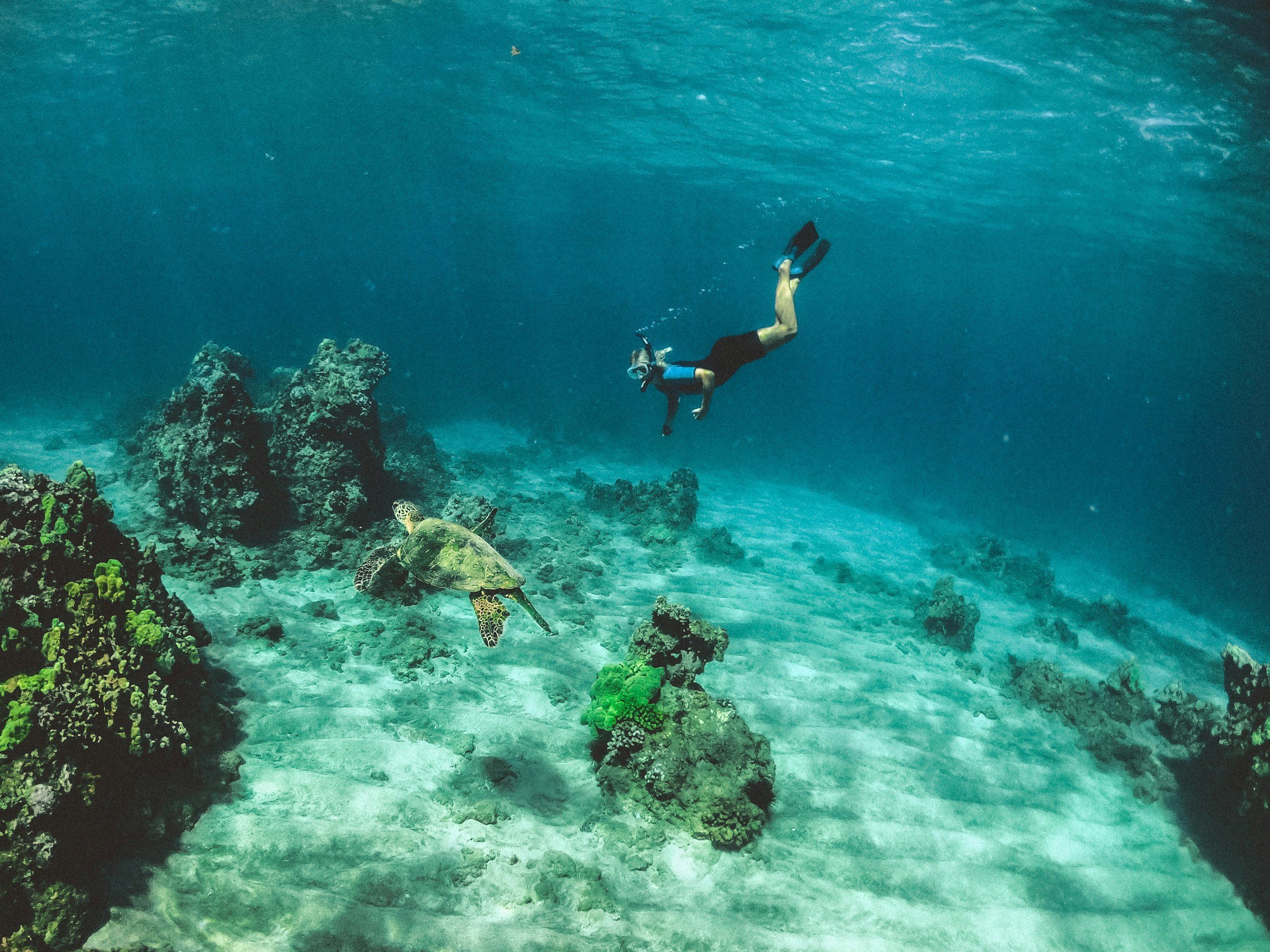
Tip: If you have family or friends that live in another part of the country or abroad, see if it is possible to link your gap year to their location. Having a local connection as a familiar face, emergency contact, or even a free - cheap place to stay can be a huge bonus.
You’ll want to consider the safety of any locations you might travel to. You can look at country profiles on the U.S. Department of State website, and view Traveler’s Health information provided by the CDC. Regardless of where you travel, you should always ensure that you have adequate health insurance and travel insurance to cover you in case of illness or injury during your gap year.
Structure & Support
You’ll want to spend your gap year doing things you enjoy in places that interest you, but you also want to ensure that those places and experiences offer you an appropriate amount of challenge and support. This is key for a successful gap experience. Ask yourself:
How comfortable am I venturing out in the world on my own?
Can I use my voice to be an advocate for myself?
How will I manage stressful situations?
If these questions make you feel anxious, or you feel that you might struggle to advocate for yourself or independently manage stressful situations, then you might opt for a more highly structured and supported experience to begin your gap year. Programs that incorporate a program leader or mentor can be a great start for students who don’t feel ready for an independent experience or would feel more reassured with additional support. You want to feel challenged during your gap year, but not challenged to the point that you become stressed and unable to cope. Talk with your parents or caregivers about what level of structure and support you might need.
Tip: It’s a good idea to begin the gap year with more structure & support and transition into experiences that allow for greater independence as the gap year progresses.
Want more advice on how to plan your dream gap year adventure? Check out the DIY Gap Year Toolkit. It includes: a 64 page workbook with engaging exercises to jumpstart your gap year planning; informative videos on The Foundations of the Gap Year, How to Set Gap Year Goals, Budgeting, Safety, and A Step by Step Guide for How to Launch Your Gap Year; Access to a Gap Year Opportunities List with over 100 different experiences to choose from; and a One-on-One Planning Session to workshop your Gap Year Plan with a professional gap year consultant.
Gift Ideas for Grads Taking a Gap Year Updated for 2024
Wondering what to gift an intrepid adventurer soon-to-be graduate who is taking a gap year after high school? Whether they are bound for a semester of Eurailing, Hiking the Appalachian Trail, or dedicating a year of service to Americorps here are some essential items they will find useful during their gap year and beyond.
LL Bean Personal Toiletry Bag is quality, essential piece of gear for any traveler. It can also come in handy for dorm life when they get to college.
Quick Dry Towel is useful for travelers, backpackers, and volunteers sharing bathrooms or regularly on the go.
A Universal Travel Adaptor will come in handy for any gapper who plans to embark on some international travel during their gap year.
A Power Bank is an increasingly essential item for any young person, but especially one who might be relying on it for help navigating a new city, keeping an emergency communication device charged in the backcountry, or anyone living in bunk room style dorms sharing wall outlets with 12 - 20 other people.
Lightweight Notebook or Journal can be a useful item for writing down must visit restaurants, shops, and other hidden gems during travels, journaling about gap year experiences, or sketching their own masterpieces after being inspired by sights at the Uffizi or Louvre.
A Sturdy Suitcase is a big ticket item when it comes to gap year gear, but a quality piece that is versatile in many different scenarios can last decades.
Bluetooth capable Music Player that doesn’t connect to WIFI such as a vintage iPod Nano (make it more personal by loading a playlist of songs you selected)
Portable Bluetooth Speaker is a great gift for music lovers who also love to be the life of the party.
Portable Sewing Kit might seem like a boring gift, but it can be absolutely clutch at times…. Like the time our window blew off our tent on Day 2 of a 4 day backpacking trip in Iceland.
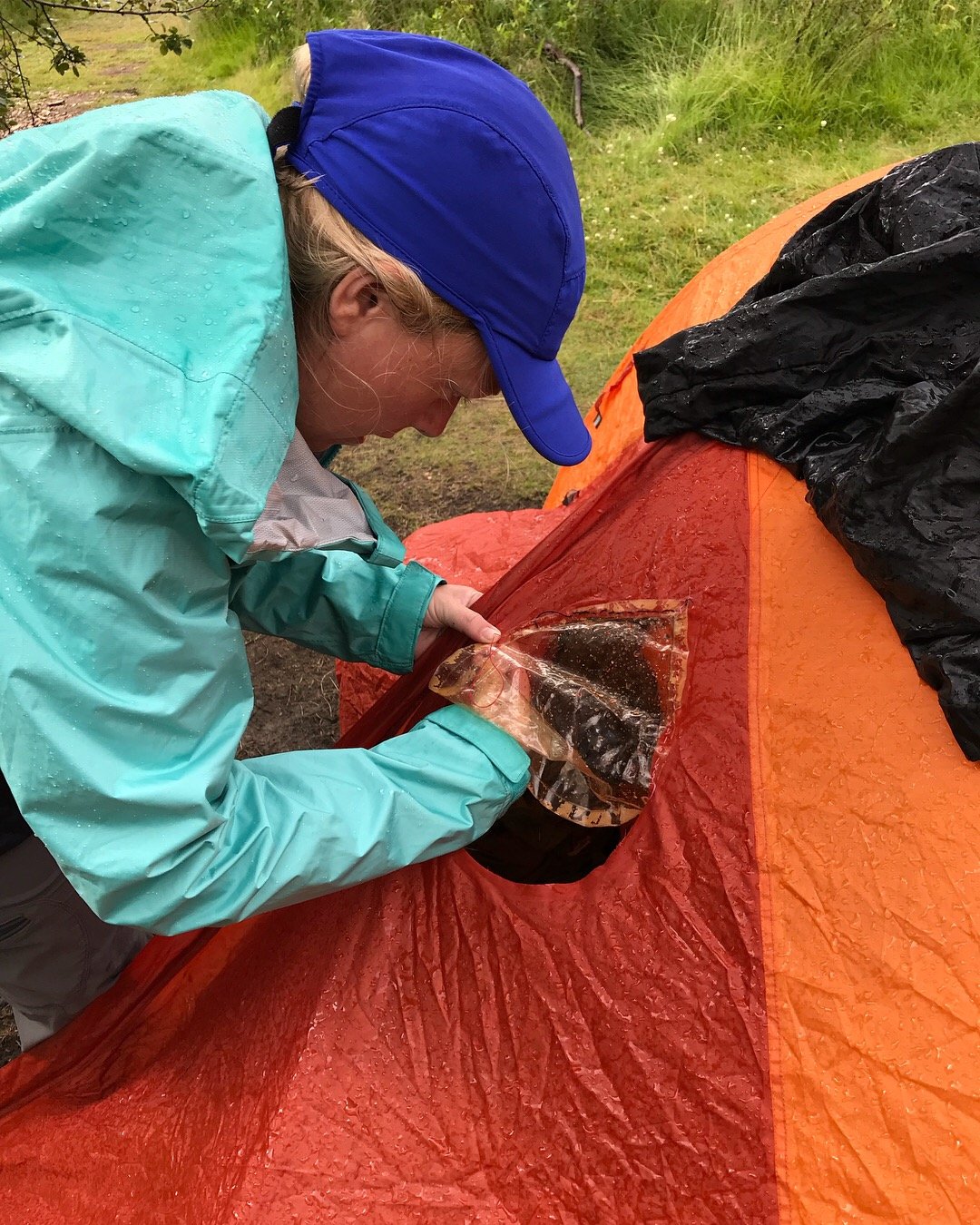
Repairing a tent window with my emergency sewing kit in Iceland
Bamboo Travel Utensil Set is a thoughtful gift, especially for environmentally conscious gappers who wish to reduce their single use plastic consumption.
Frequent Flyer Miles make a great gift for any gapper needing to travel by air during their gap year, since airfare can be one of the biggest expenses gap year students face. You may want to check with the recipient first before transferring miles in case they need to travel with a particular airline, such as with a group flight.
Portable Travel Games like Bananagrams, Uno, or Game of Things (travel size version) can help foster new relationships during the gap year.
Cash, Visa Gift Cards, or contribution to their Gap Year Fund might feel impersonal, but are always incredibly useful and appreciated by all gappers, especially those funding their experience on their own.
Laura's Gap Semester
I had always dreamt of traveling and making a difference in my community. After completing high school, I looked for a gap year counselor who could guide me in choosing programs that would be best suited for me. Susan helped me find the perfect programs, and I am grateful for everything I learned and discovered about myself. I got to visit several places and meet new people. Last year was the best year of my life.
My first experience was with the Northwest Youth Corps in Oregon. I didn't expect it to be as challenging as it was, but it taught me many valuable lessons. I had to push myself to the limits, and I gained a great deal of discipline, which I needed. I ended up meeting some fantastic people, and we bonded over the shared experience. The views we had after hiking to the top of the mountains were wonderful. Even when some members quit, and we faced challenges, we stuck together. Overall, it was one of the hardest yet most rewarding things I have ever done.

Laura tent camped for 5 weeks in the Pacific Northwest while volunteering with Northwest Youth Conservation Corps

Laura and fellow corps members enjoying some time on the beach

Laura and fellow NWYC corps members
My second experience was with Give & Surf in Panama, and it was life-changing. I remember arriving and thinking I was in paradise. When I met my boss, I thought she was the sweetest. We ended up being three volunteers, and counting my boss, four people lived in the volunteer house. We became close, and I still talk to them and miss them so much. There was Chris from the Netherlands, Riley from the States, and Danielle from Canada. I volunteered at a preschool and a community center. It was crazy to me that we traveled from our volunteer house to the the preschool by boat, which worked like a school bus too. I remember the kids like it was yesterday. They were full of life and always smiling. I wish the experience never ended.

Headed to class in Panama
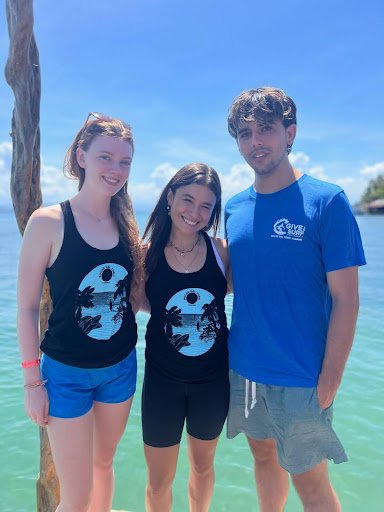
Laura with fellow volunteers in Panama
During my gap semester, I had the opportunity to participate in a program with Raleigh International in Costa Rica. I was pleasantly surprised to find out that there were 87 members in the program. Although initially shy, my previous experiences helped me come out of my shell. I made lots of new friends and had a great time socializing with everyone.
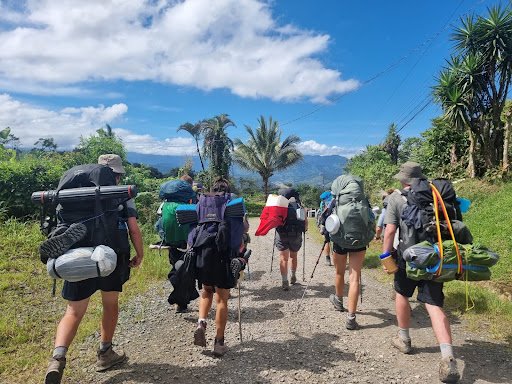
As I was only there for seven weeks, I only participated in two phases: trek and community. During the community phase, we built a classroom entirely from scratch, which was a lot of fun. The second phase was the trek, which was quite challenging but also incredibly rewarding. We hiked for 250 kilometers and faced numerous obstacles along the way. However, these challenges brought our group closer together and made us stronger. Finally, arriving at the beach after such a long hike was an indescribably rewarding experience, and doing it with my friends made it even better.
Trekking in Costa Rica
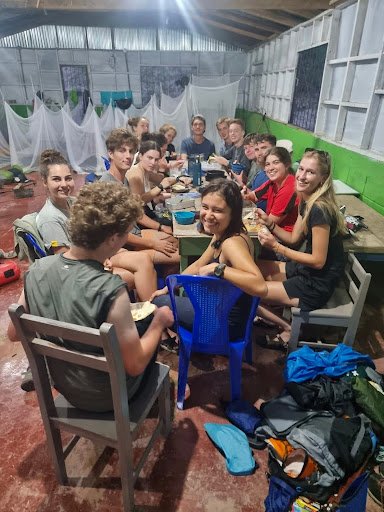
Mealtime and sleeping quarters while trekking in Costa Rica
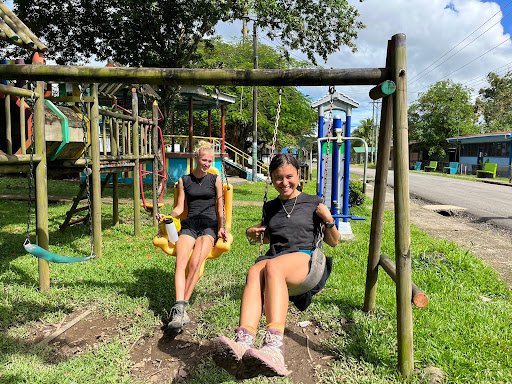

Gap Year Travel in Europe on a Budget
By Josie Herring
During the spring portion of my gap year I spent 2 months traveling solo-ish in Europe. Although this was never in my original gap year plan, I had to rearrange my plans quite a few times and it is where I ended up and I am so grateful that I did. This past year was a weird time to take a gap year with ever-changing COVID restrictions, war, and multiple other factors. Not only did I get to learn about the world and myself, but I also learned the importance of going with the flow. I’ve always considered myself to be a flexible person, able to move wherever life takes me but in all honesty, this was a totally different ballgame. I had never traveled alone for so long and I had never left home with no idea when I would come back. In March, I booked a one way plane ticket to Copenhagen and packed up my backpack and took off with minimal plans, a tight budget, and no return flight home. I had plans to meet a friend in Copenhagen and then head to Cadiz, Spain to spend 3 weeks at a Spanish school. From there, I had pretty vague ideas about where I would end up. I found this a little bit stressful at first but as I got into it I realized there was no need to be as worried as I was. As soon as my plane landed in Copenhagen, I was ready to go wherever my feet (and FlixBus) would take me.
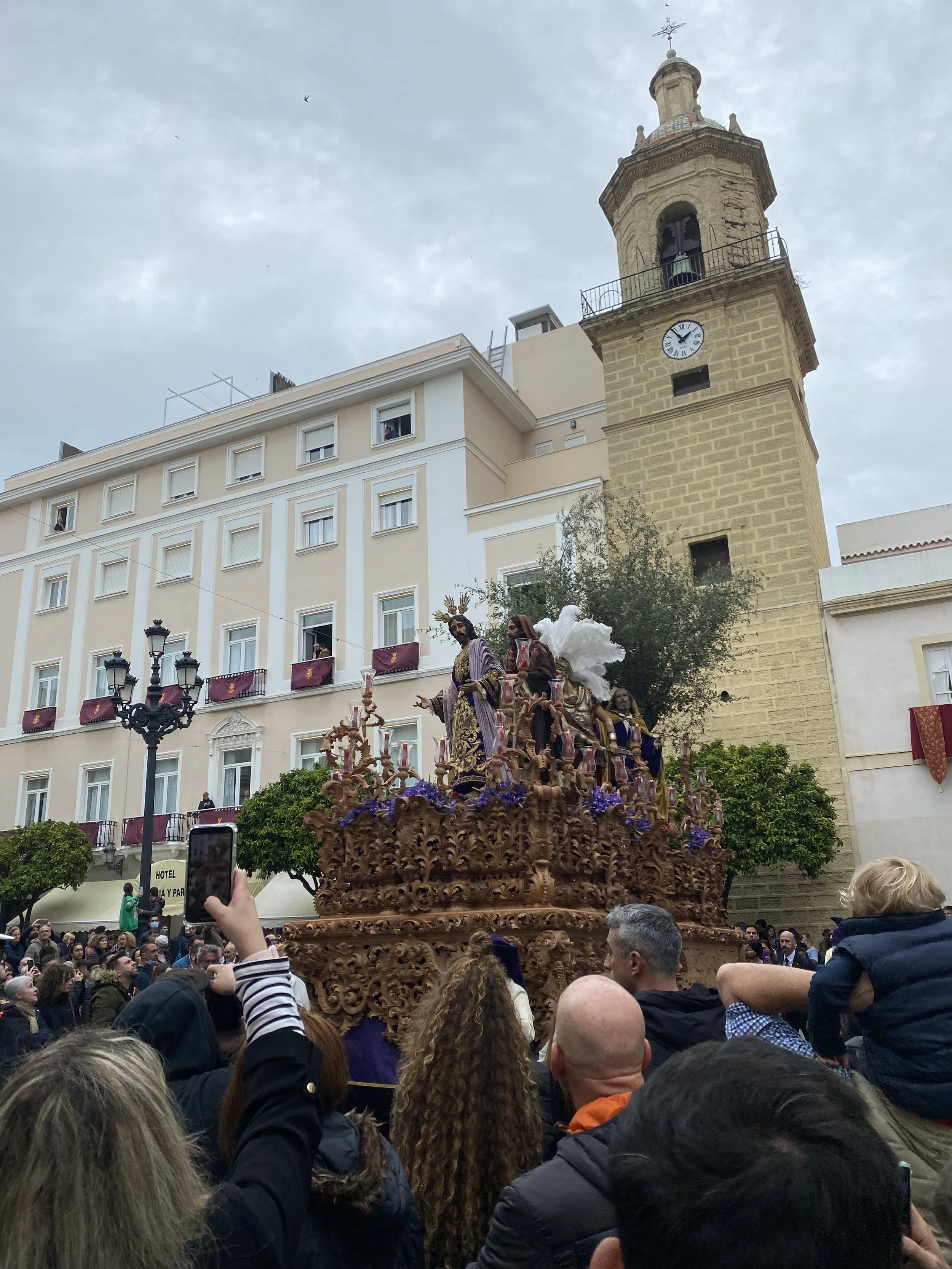
Semana Santa in Cadiz, Spain
Before continuing, I would like to restate that I did this on a pretty strict and pretty much self-funded budget. I spent a lot of my senior year of high school and the summer after graduation working 40+ hours a week between two jobs, as well as picking up odd jobs like dog sitting and babysitting on the side to make my gap year possible. Before departing for this trip, I had moments of weariness. Did I have enough money to actually do this? Would I be able to make it work on my budget? The answers were yes. In total I had around $6000 in savings when I left and ended up using a little over $5000 for the total 2 months of my trip. There were small sacrifices I had to make along the way such as choosing to take a $15 ten hour bus ride over a $40-$50 six hour train ride or spending less on food (by cooking at my hostel rather than eating out every meal) in order to purchase tickets to see things like The Alhambra in Granada or Belem Tower in Lisbon. In the end, it was always worth it. Maybe I was on a bus for ten hours, but hey I got to see the beauty of the Spanish countryside. Maybe I spent a little less on food some days by cooking rather than eating out, but I got to walk around sites filled with history and culture.

Alhambra in Granada, Spain
Moving on from budgets and finances and to the actual traveling part, it’s safe to say I was pretty nervous going into this trip. I had very minimal experience traveling alone, especially outside of the United States so the idea was pretty daunting at first. I wasn’t solo for my entire trip and met up with friends in a couple different places, but for the majority of the time I was on my own. My main concerns were having to navigate new cities and countries alone and being extremely lonely during the solo portions of my trip. Madrid was the first city I visited by myself and also where I realized there was no need to be as nervous as I was. I immediately made a new friend my first day there and was able to keep doing this for the rest of my trip. Not only did staying primarily in hostels help me to save money but it also allowed me to meet people in every city that I visited. I never felt truly alone because I was constantly meeting new people and spending time exploring new places and experiences with my newfound friends. I even met people that I’m still in contact with and plan to see again even after leaving them behind and returning home.
During my travels across Europe, I saw places I had previously only ever dreamed of visiting. I visited stellar museums in Copenhagen, bustling food markets in Spain, colorful tiled buildings in Portugal, castles in Budapest, and the clearest water I have ever seen in my life in Croatia. I spent a big portion of my trip (3 weeks) at a Spanish school in Cadiz, Spain. I spent each week going to classes in the morning and then exploring the smaller city during my afternoons. Not only was I able to learn and improve at Spanish, but the school also offered cultural activities where we were able to learn about the history and culture of the city and country we were in. I was able to learn and improve my Spanish skills while also getting to form a connection with the city I was in and the people around me. My time at the school prepared me to continue traveling around Spain afterwards as well. I left Cadiz with better (but still not perfect) Spanish and more knowledge about culture and customs in Spain. I found it easier to visit different cities like Granada and Barcelona because I felt as though I was more prepared to communicate and navigate the cities. The rest of my time in Spain was spent visiting centuries old landmarks, art museums such as the Picasso museum in Barcelona, and also eating amazing food. From Spain I headed to Portugal, a country somewhat similar but also totally different from Spain. I spent most of my time in Portugal exploring the most picturesque places such as the Algarve, Jardins do Palácio de Cristal in Porto, and the ancient architecture of Portugal's past.

Lisbon, Portugal
Originally I planned to only visit Copenhagen, Spain, and Portugal but as time went on I was ready to see something new. I found a cheap round trip flight to Budapest with a return flight from Dubrovnik and less then 48 hours after booking it, I was off to a completely different part of the continent. That spontaneous decision is probably one of the best I made during my entire trip. I got to see historical pieces of Budapest and learn more about Hungarian culture. From Budapest I headed to Zagreb, Croatia where everyone was welcoming and kind. During my first day I did a walking tour (one of my favorite activities in any city I visited) and got to learn about the history of Croatia, Yugoslavia, and some of the awesome things we have today that came out of Croatia (electric light bulbs for example!).

Split, Croatia
By the end of my trip, I felt as though I had left a small piece of my heart in every place I visited. After coming home, everyone asked me my favorite place I went to, my favorite things that I did, my favorite foods that I ate, etc. Those questions were extremely difficult to answer because everywhere I went had something different that I loved. Semana Santa celebrations in Cadiz, the Alhambra in Granada, Park Guell in Barcelona, Rua Augusta Arch in Lisbon, the Jewish quarter of Budapest, the old towns of Croatia, and so much more. It’s impossible to pick a favorite place or favorite thing out of all of these amazing experiences.

Fisherman’s Bastion Budapest. Hungary
In the end, I am extremely grateful I decided to take a gap year and for all the places it took me. I am grateful that all of my plans changed and I ended up in places I never planned to visit this year. I am grateful for all the people I met and the connections I created with people from all across the globe. And finally, I am so grateful that I was able to have the experience of traveling alone for the first time. It gave me a chance to spend more time with myself and really evaluate myself. Every person in life builds their personality from the people they spend the most time around and in a way, our personalities are all just little pieces of each other. Traveling by myself gave me the chance to discover more about who I am and what I want from life without the presence of close friends and family from home. While it’s fun to travel with friends and it’s fun to have people to share our experiences with, it’s also liberating to travel alone and amazing to see how you can develop from doing so.
Josie was the 2021 Recipient of the Free to Roam Adventures Gap Year Counseling Scholarship. For details, or to apply click here.